If there’s one thing I’ve learned since becoming a parent, it’s that money leaks faster than rain through a half-zipped buggy cover. From impulsive toy-shop tears (mine and the kids’) to the creeping cost of energy, the monthly outgoings can feel relentless.
Whether you’re just trying to keep it all together, are trying to save up a rainy day fund for any unwanted expenses, saving for a family holiday or looking ahead to buying all the Christmas ornaments and gifts, having a budget can help you save money for the things you need.
Today I’m sharing the planner and practical tricks that finally stopped our budget wobble—and, I hope, will steady yours too.
1. Map Your Real Income (Don’t Forget the Hidden Boosts)
| Income stream | 2025/26 allowance or average | How to track |
|---|---|---|
| Salary / Self-employment | Personal Allowance £12,570 before tax kicks in gov.uk | Spreadsheet / banking app export |
| Child Benefit | £26.05 pw for eldest, £17.25 pw for each additional child gov.uk | Automate into its own “Kids” pot |
| Tax-Free Childcare top-up | Up to £500 every 3 months (that’s £2,000 a year) per child gov.uk | Reconcile quarterly in your planner |
| Side hustles & cashback | Varies | PayPal sweep into savings pot monthly |
Planner tip: Create a simple “Income Snapshot” tab in Google Sheets (or use the free download at the end) so you can see exactly what lands each month versus irregular extras.
2. List Unmissable Bills First (the “Keep-the-Lights-On” Layer)
- Mortgage/Rent – set to auto-deduct on payday so it’s never late.
- Council Tax – most UK councils allow 12-month payments; stretching from 10 to 12 months can free ~£30-£50 cash flow in high-spend months.
- Energy – From July–Sept 2025 the Ofgem cap drops 7 % to an average £1,720 a year for dual-fuel homes moneyweek.com. If your direct debit is well above £143 pm, run a comparison today.
- Water, Broadband & Mobile – Haggle annually; even five minutes on live chat can cut a fibre bill by £10 pm.
- Insurance – diarise renewal dates and use comparison sites at least 21 days before they lapse for the best quotes.
Planner tip: Colour-code mandatory bills in red on your monthly worksheet; everything else is negotiable.
3. Tame the Food Shop Without Living on Beans
- Meal-plan backwards: check the freezer first, then plan five core dinners.
- Swap premium supermarkets: Latest ONS “grocery basket” data confirm discounters still undercut big-four prices on staples by 15–20 % ons.gov.uk.
- Too Good To Go & Olio: rescue bakery bags for £3 – £4; freeze what you won’t eat that day.
- Batch-cook hero: one Sunday stew can stretch to Monday pie and Tuesday pasta bake.
4. Slash “Leakage” Spending
| Leak | Quick Fix | Monthly saving |
|---|---|---|
| Unused streaming | Rotate subscriptions; never pay for more than two at once | £15+ |
| Coffee & snacks | 1 L flask + mini snack box on school run | £30 |
| Impulse Amazon orders | 24-hour cool-off rule (keep in basket) | £20–£40 |
| Kids’ clubs overload | Cap each child to two paid activities/term | £25–£60 |
Planner tip: Use Monzo, Starling or Chase “round-ups” to whisk spare pennies into a Treat-Us pot—guilt-free spends only when the pot is full community.monzo.com.
5. Automate Your Savings (So You Don’t Miss Them)
- Direct debit ‘pay yourself first’ into a high-interest easy-access ISA.
- Micro-challenges: try the viral “1-penny-a-day” sweep—£667.95 by New Year! community.monzo.com
- Salary sacrifice childcare vouchers if your employer still offers them (worth up to £933 per parent, per year after tax).
- Set a “Fun Fund”: 5 % of income for guilt-free family days out—budgeting without joy rarely lasts.
6. Grab Every Government Freebie
- 30 Hours Free Childcare – apply by 31 August 2025 for September start educationhub.blog.gov.uk.
- Tax-Free Childcare – see the £2k top-up above; eligible alongside 30 hours.
- Healthy Start Vouchers – worth up to £4.25 pw toward fruit, veg & milk if you’re on qualifying benefits.
- Warm Home Discount – £150 off winter electricity bill for low-income families; many suppliers open applications in October.
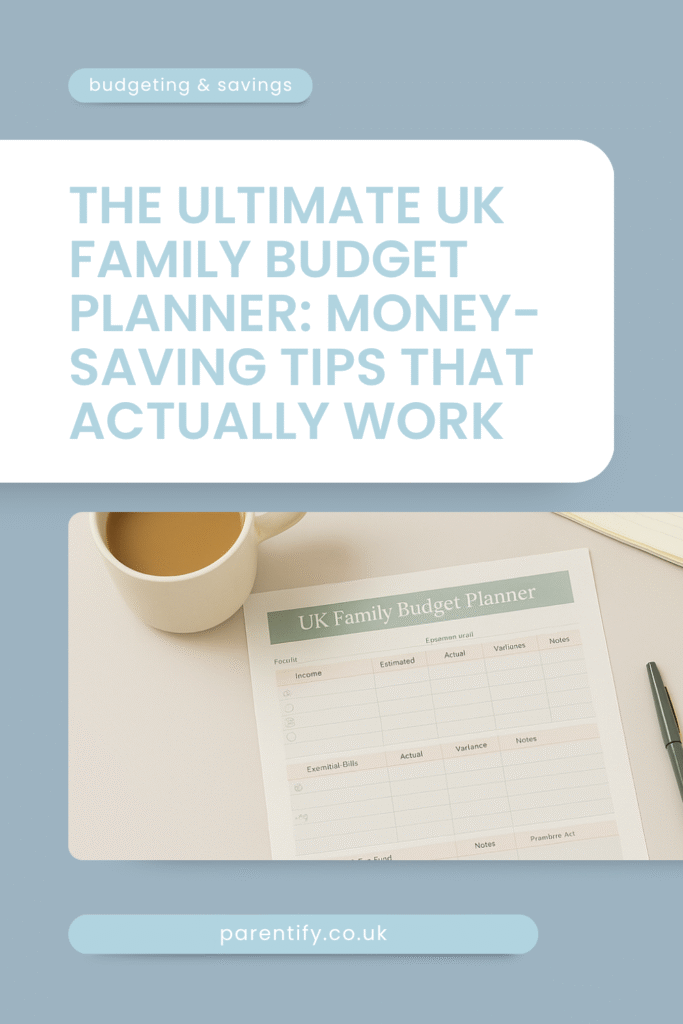
7. Download Your Free Printable Planner
Make sure to scroll to the end of this post to download your free printable planner, that can help you to track your finances and manage your money and savings better.
8. FAQs (Bookmark for Later)
How much should we save each month?
Aim for 10 % of net income; if that feels impossible, start with 1 % and step up quarterly.
Should I fix my energy tariff now?
If you can lock in below the current £1,720 typical cap and the exit fee is low, it may be worth it—especially before winter price rises moneyweek.com.
Is cash still king for budgeting?
Digital pots make tracking easier, but a physical envelope for kids’ activities can curb contactless creep.
A final word from the kitchen table
Perfect family budgets don’t exist—life (and messy toddlers) will see to that. What does work is a living, breathing plan you tweak each month. Print it, scribble on it, celebrate the small wins (first £100 emergency fund? HELLO, victory dance!). Your future self—and your children—will thank you.
If you found this guide helpful, please pin the graphic below and share it with your WhatsApp mum group. Let’s spread those savvy-saver vibes across the UK!
Happy budgeting, friends—here’s to more pennies for adventures and fewer for bills.
Download your free UK Family Budget Planner below.